


Step machining is a common process requirement in precision manufacturing. surface grinding machines, due to their high precision and excellent surface quality, are widely used for step machining.
However, to achieve dimensional accuracy, sharp edges and corners, and a smooth surface, it is necessary to master the correct machining methods and techniques.
In the fields of mold making and precision manufacturing of mechanical parts, step machining is frequently required.
Step machining refers to forming machined surfaces of different heights on a workpiece, requiring the machined workpiece to have good flatness and smoothness, and consistent product quality.
Before performing step machining, we must first inspect the workpiece to confirm that the material is suitable for grinding.
Then, use a fixture or electro-hydraulic disk to fix it, ensuring that the contact surface is clean and flat.
Select the appropriate grinding wheel according to different materials; for finishing, a fine-grit grinding wheel should be selected.
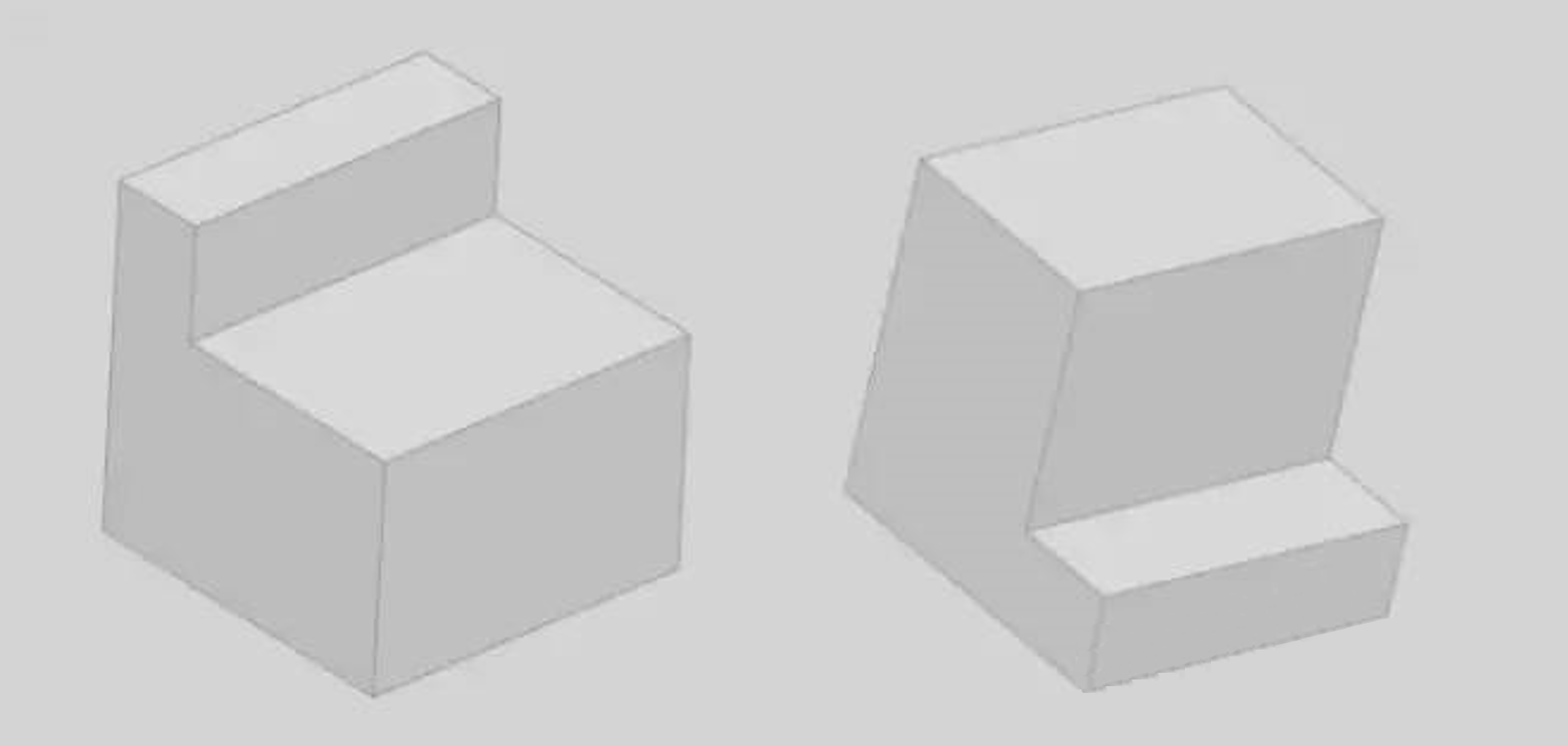
Machining steps with a surface grinding machine is not difficult. It is important to note that steps can be ground from two directions;
the choice of which direction to cut the step from depends on efficiency. As shown in the image below, changing the direction of the grinding wheel on the same part completely changes the grinding efficiency.
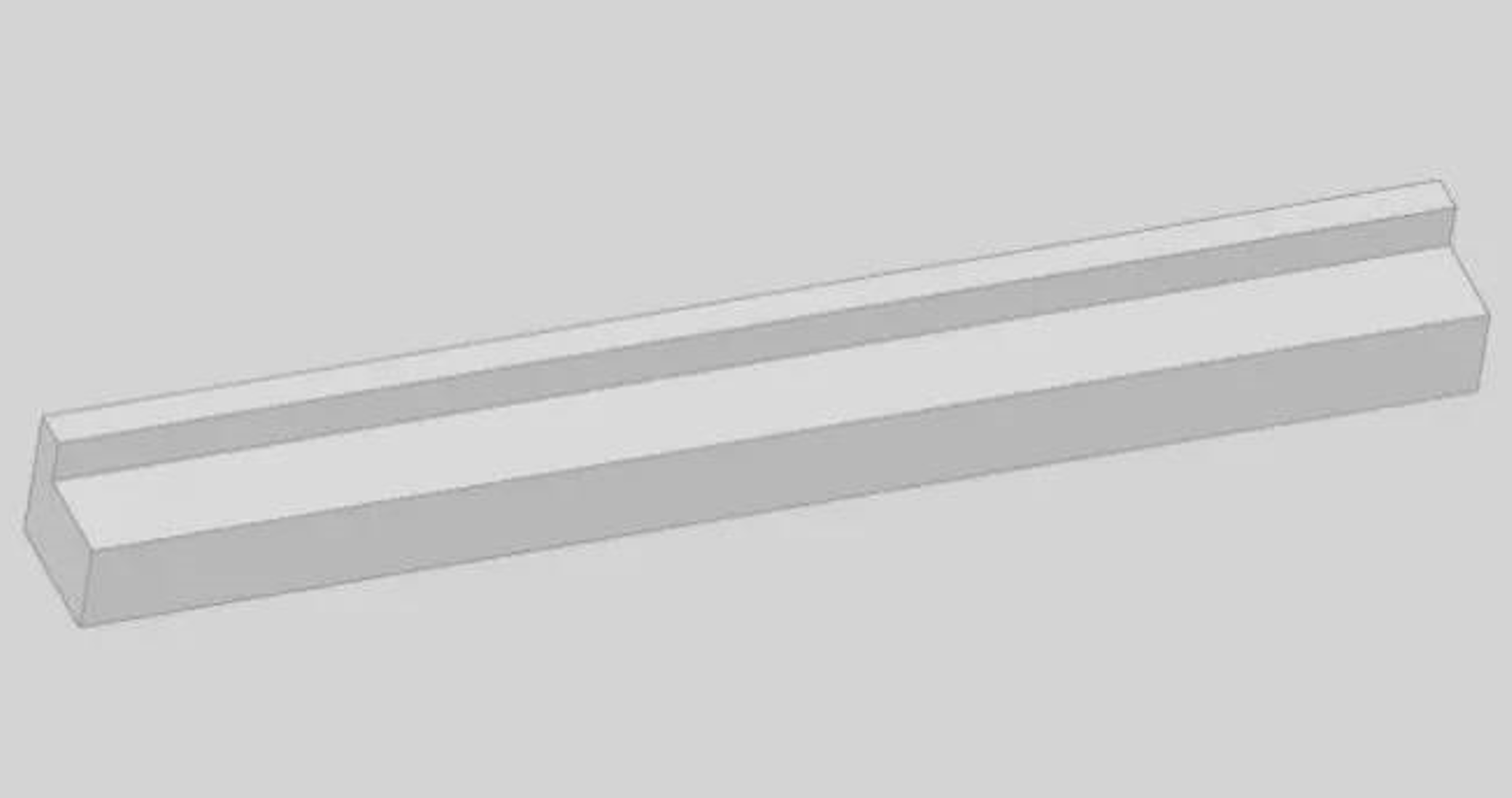
1. Grinding Steps on Particularly Long Workpieces: When grinding a large workpiece with a large grinding area, the heat generated during machining is high, making it prone to deformation.
Therefore, careful attention is needed during roughing. The direction of the step should be carefully selected. During finishing, it's best to avoid grinding the sides and bottom simultaneously.
Use a coarse grinding wheel to grind one surface horizontally, then stand it up to grind the other surface.
Minimize using the side of the grinding wheel for grinding. Finally, switch to a fine grinding wheel to clean the corners.
2. Grinding Steps on Small Workpieces
We often encounter steps as small as 0.1mm or even 0.05mm. For non-precision machining, these steps can be machined arbitrarily However, for precision parts, corner clearing is necessary.
The design usually specifies that corner clearing is required to ensure the radius (R) is less than 0.03mm.
Regardless of the step's size, a straight edge must be achieved, even if it's only a few micrometers. For most materials, 3-5 passes with a 120K grinding wheel are sufficient.
For materials with particularly high hardness, such as DC53 and SKH-9, it's more complicated, requiring a finer grinding wheel like a 360K, and the number of passes needs to be increased accordingly.
Experienced grinders check the radius (R) based on feel and experience, while those less experienced can use a projector to check; after several projections, they will have a better feel for it.
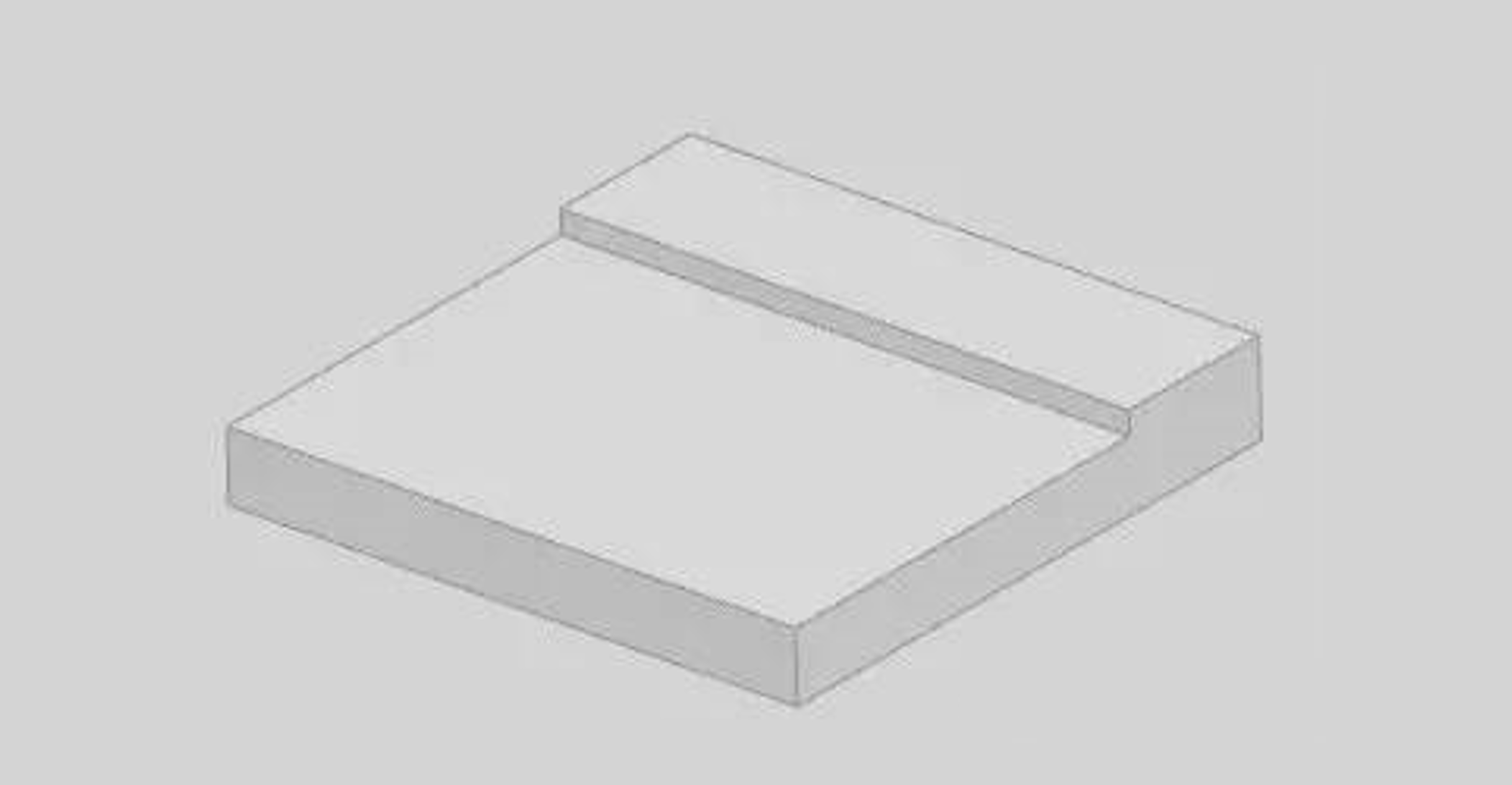
3. Steps with Radius (R)
This is also very common. The key is to leave room for a radius (R) when roughing, creating a step. During finishing, simply correct the radius to the correct position, as shown in the image below.
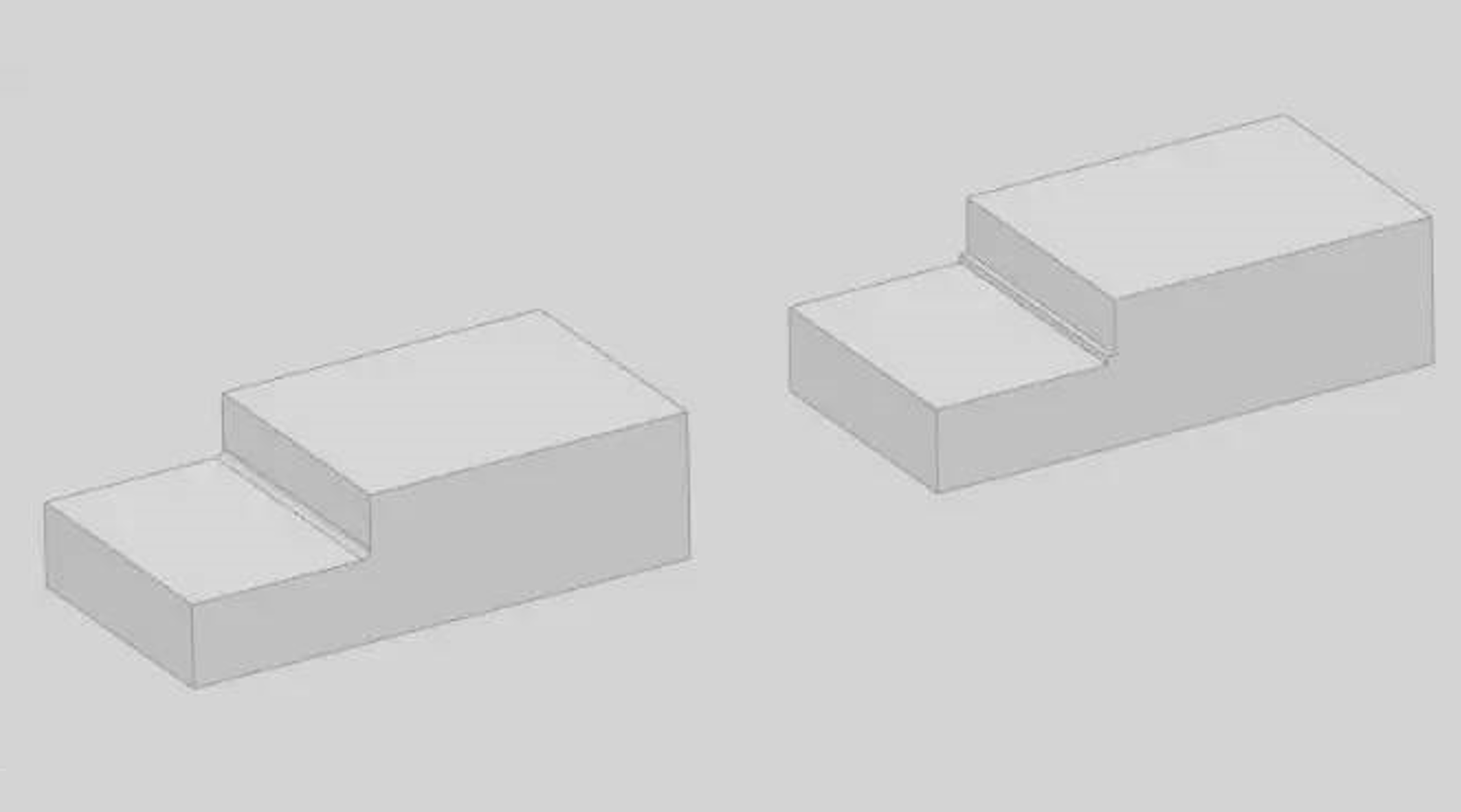
4. Four-Sided Steps
For this type of workpiece, it's crucial to leave a certain amount of support on each side, sometimes called a "foot." Otherwise, there will be no support points during fine grinding, potentially leading to deformation.
The support doesn't need to be too large; 0.7-2mm is sufficient to prevent deformation when removing the support.
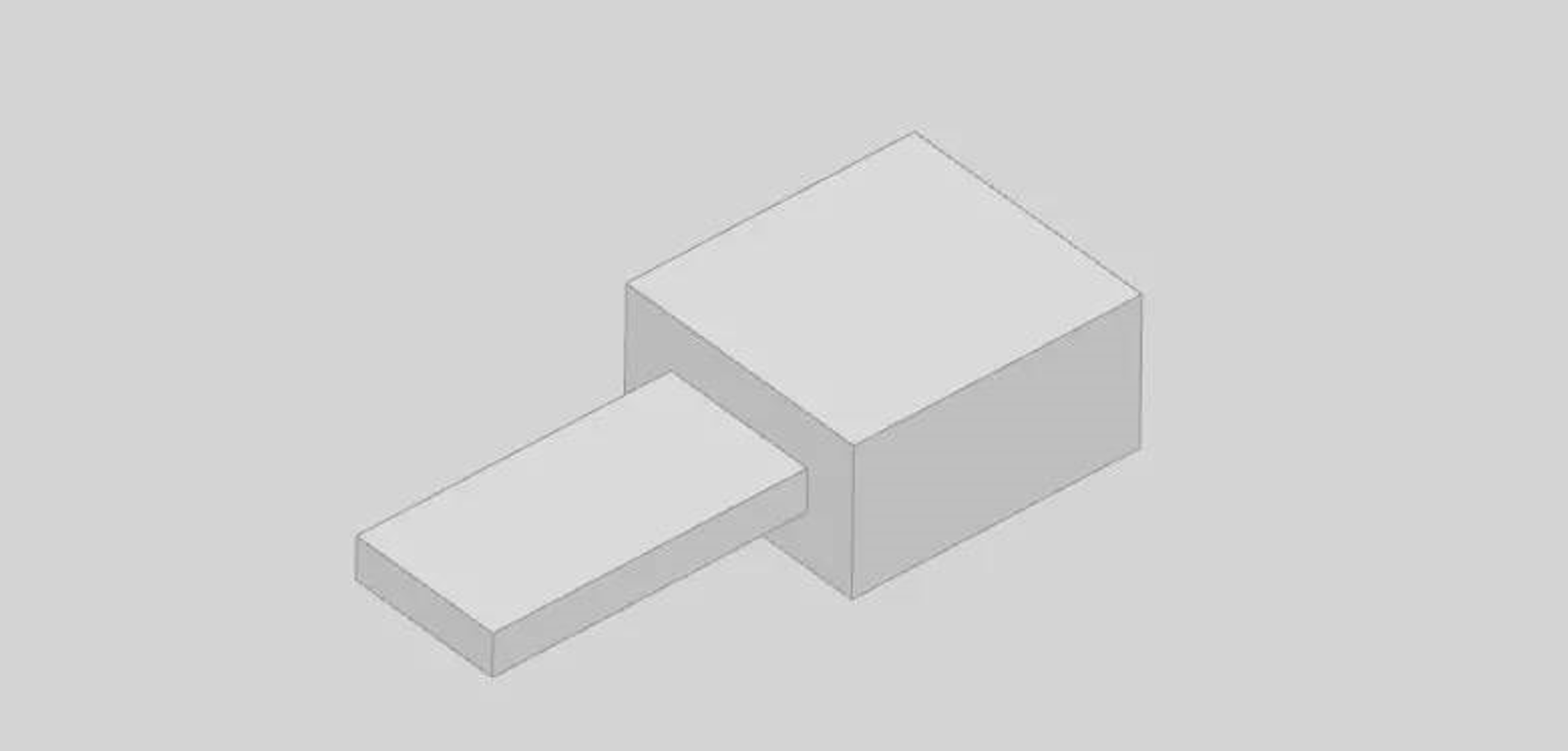
1. When machining steps, we must first learn to rough grind to remove excess material, and then perform fine grinding. Each step should be machined layer by layer to ensure a unified reference surface.
2. Control the cutting depth during feed and reduce the feed rate.
3. When grinding edges and corners, use fine feed to avoid chamfering and prevent over-cutting leading to rounded corners.
4. Use measuring tools promptly to check accuracy and calibrate errors to prevent positioning errors or inaccurate measurements that could cause inconsistent step heights.
5. Ensure the machine tool is stable during grinding to prevent vibration or thermal deformation from affecting the machine's flatness and parallelism.
6. Dress the grinding wheel before grinding to prevent wheel wear that could result in poor surface roughness of the workpiece after grinding.
Surface grinding for step machining requires not only a high-quality surface grinder but also precise control and standardized operation.
The YASHIDA 3060AHD and YASHIDA 4080APS grinders are ideally suited for machining such stepped parts.
With appropriate grinding processes and meticulous adjustments, high-precision, high-quality step machining results can be achieved.
Recommended Grinding Machines:
YASHIDA 3060AHD automatic surface grinding machine
YASHIDA 4080APS CNC surface grinding machine
Learn more about surface grinders:
How to Control Surface Roughness of High-precision CNC surface grinding machines
Common Faults and Quick Repair Guide for CNC Surface Grinding Machines
The Influence of Temperature on Machining Accuracy of Surface Grinding Machines
Basic Mechanical Knowledge – Understanding Flatness in Surface Grinding
Main Safety Risks and Preventive Measures for Surface Grinders
How to Perform Mirror grinding on a High-Precision Grinding Machine
This website uses cookies to ensure you get the best experience on our website.
 Español
 Portugues
 Pусский
 العربية



 Phone
Phone
Comment
(0)