

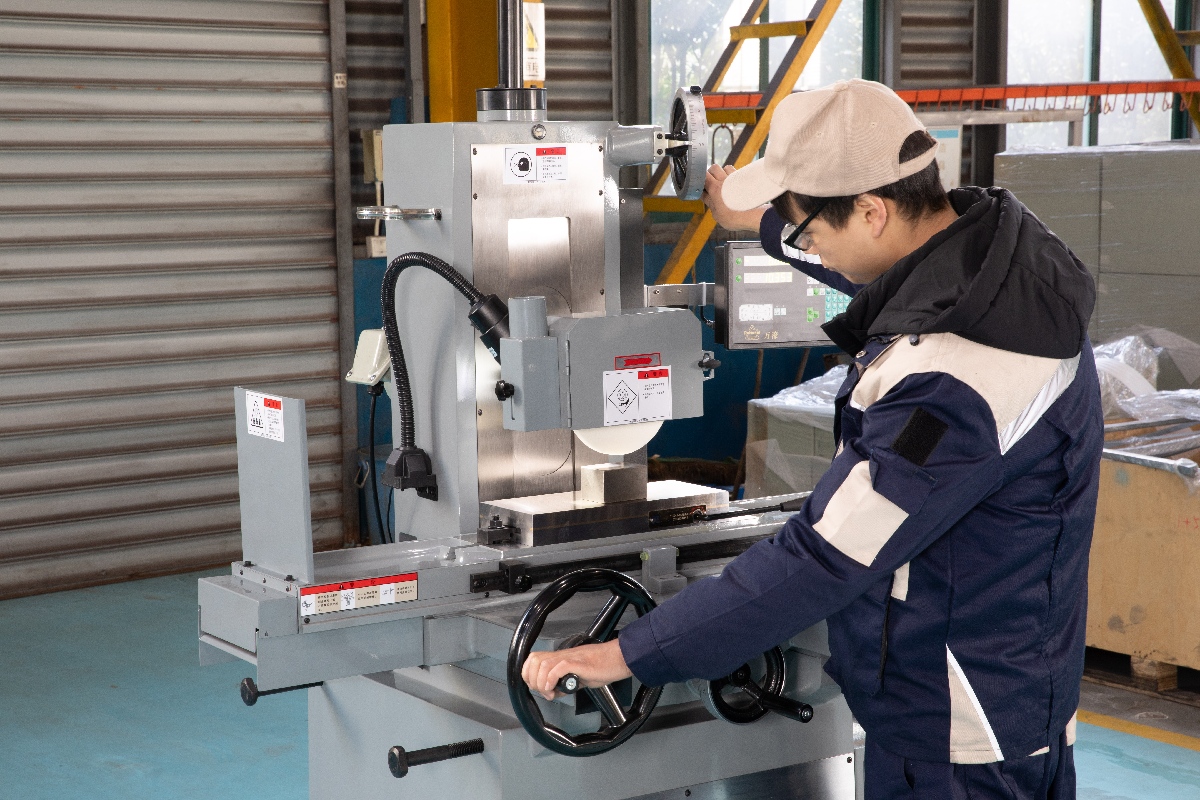
In the field of precision manufacturing, the surface roughness of parts directly affects the sealing performance, wear resistance, and assembly accuracy of products.
As a core processing equipment, the surface roughness control capability of precision CNC surface grinding machines is a key indicator for measuring processing quality. This article will analyze the key factors affecting surface roughness and control methods.
Surface roughness refers to the microscopic unevenness of a machined surface, usually expressed by the Ra value. The smaller the value, the smoother the surface.
In high-precision grinding, surface roughness can typically reach Ra 0.2–0.4 μm, and even lower under optimized conditions.
Surface roughness is one of the important indicators for measuring processing quality. For high-precision CNC surface grinding machines, achieving stable and excellent surface finish is crucial for improving product performance and meeting industry standards.
Achieving low-roughness machining requires building a comprehensive process control system, focusing on multiple dimensions from wheel adaptation and process optimization to environmental management, precisely avoiding various factors affecting surface quality.
As the core tool in grinding, the characteristics of the grinding wheel directly determine the surface texture of the workpiece.
The appropriate grinding wheel type must be selected based on the workpiece material and roughness requirements: diamond grinding wheels are suitable for machining hard and brittle materials, while corundum grinding wheels are suitable for metal materials;
for precision machining, fine-grained, high-hardness grinding wheels should be prioritized to reduce surface roughness by minimizing individual abrasive grain cutting marks.
The grinding wheel needs to be dressed regularly before use. A diamond dressing pen is used to remove dull abrasive grains from the grinding wheel surface, restoring grinding sharpness and preventing increased surface scratches due to wheel wear.
Appropriate matching of grinding parameters can effectively reduce surface roughness. A graded grinding strategy of "rough grinding—semi-fine grinding—fine grinding" is adopted, gradually reducing the feed rate and depth of cut.
The fine grinding stage achieves improved surface finish with minimal grinding allowance. Reasonable control of grinding speed, and appropriately increasing the grinding wheel linear speed, reduces the contact time between the abrasive grains and the workpiece, minimizing surface roughness caused by plastic deformation.
Simultaneously, it is necessary to ensure smooth table movement and avoid uneven machining patterns caused by speed fluctuations. Furthermore, strict control of workpiece clamping accuracy is required, employing high-precision fixtures and reasonable clamping methods to prevent workpiece deformation or vibration, ensuring a stable grinding process.
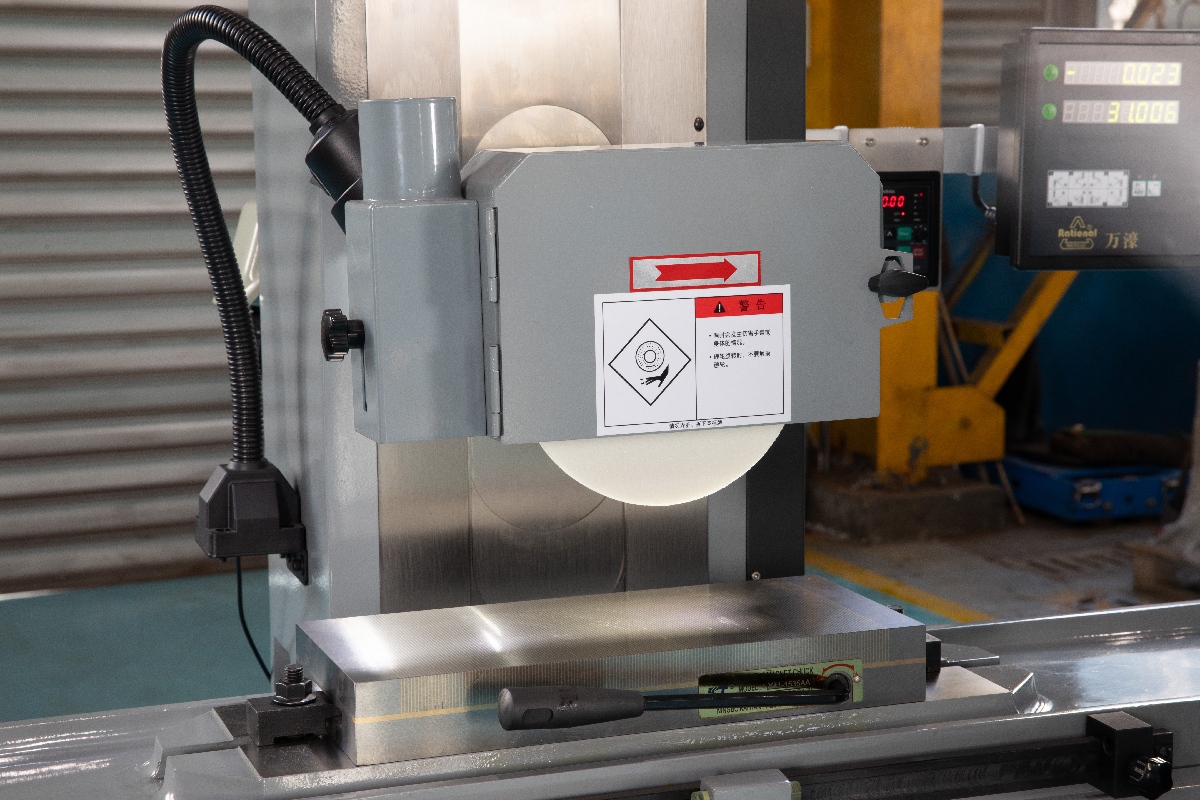
First, high-quality grinding wheels must be selected, with appropriate grit size and bonding agent chosen based on the workpiece material. Second, wheel dressing is also crucial; optimizing the dressing process is essential.
Equipment condition and environmental management cannot be ignored.
Maintaining the precision and stability of the grinding machine's core components, regularly calibrating the spindle rotation accuracy and guideway straightness, reduces surface roughness caused by motion errors;
strengthening equipment lubrication and maintenance ensures smooth operation of transmission components and avoids vibration interference.
Simultaneously, controlling the cleanliness and temperature/humidity of the processing environment reduces dust contamination of the machined surface and prevents workpiece deformation caused by temperature fluctuations, providing stable environmental conditions for low-roughness machining.
In summary, surface roughness control of precision CNC surface grinders requires a coordinated approach involving wheel selection, process optimization, cooling improvements, and equipment environment management to construct a comprehensive precision control system.
Only then can precise control of machined surface quality be achieved, meeting the stringent requirements of the manufacturing industry for precision components.
For example, YASHIDA's 4080APS CNC surface grinder typically offers automatic compensation and automatic correction functions. It employs a high-precision Taiwanese-imported spindle and an intelligent CNC system.
These technologies contribute to achieving higher consistency in ultra-precision machining.

Surface roughness control of precision CNC surface grinders requires a coordinated approach involving wheel selection, process optimization, cooling improvements, and equipment environment management to construct a comprehensive precision control system.
Only then can precise control of machined surface quality be achieved, meeting the stringent requirements of the manufacturing industry for precision components. By scientifically optimizing various factors, machining quality and product competitiveness can be significantly improved.
This website uses cookies to ensure you get the best experience on our website.
 Español
 Portugues
 Pусский
 العربية



 Phone
Phone
Comment
(0)