

In precision machining, flatness is one of the important indicators for measuring product quality. surface grinding machines are key equipment for achieving high flatness machining.
For both manufacturing companies and purchasing personnel, understanding the concept of flatness and its control methods is crucial.
Flatness refers to the requirement that all points on the surface of a part must lie within a theoretically perfect plane, with deviations not exceeding a specified tolerance range.
Flatness measurement does not involve any reference surface; it is an independent geometric tolerance. Flatness reflects whether a surface is truly "flat," and whether there are ripples or deformations.
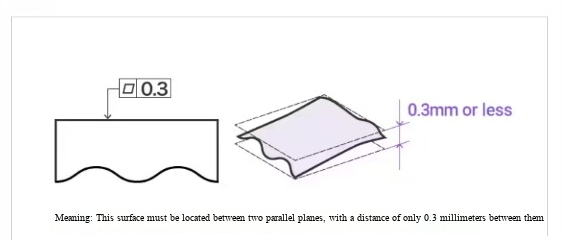
When measuring flatness, especially using a modern coordinate measuring machine (CMM), the following are some important considerations and steps:
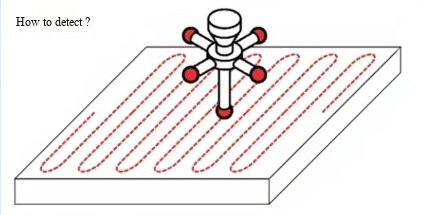
While a height gauge can be used to measure certain surface features, it has limitations when measuring flatness because it relies on a reference plane.
If the bottom of the part is assumed to be perfectly flat, this is actually measuring parallelism, not flatness. Flatness measurement requires ensuring that all points on the surface lie within a theoretical plane, not relative to another surface.
A CMM is an ideal tool for measuring flatness because it can accurately measure in three-dimensional space.
The specific steps are as follows:
1) Calibration and Setup: Ensure the CMM is correctly calibrated and set up.
2) Data Acquisition: Use the CMM to select multiple points on the part surface.
The more points selected, the more accurate the measurement results. These points should be evenly distributed across the entire surface, including edges and center areas.
3) Virtual Plane Creation: The CMM software will generate a best-fit plane based on these point data. 4) Comparison and Analysis: Compare the measured points with the virtual plane to determine the deviation of each point. The CMM software can automatically calculate the maximum and minimum deviations and determine whether the surface is within tolerance.
Through the above steps, the CMM can provide a clear flatness measurement report, including the deviation of all points and the overall flatness tolerance. This data can be used to verify whether the part meets design requirements. 4. Summary
Flatness measurement must ensure that all points lie within a theoretical plane, rather than relying on any datum surface.
Modern CMMs are the best tool for achieving this because they can accurately measure and analyze surface shape in three-dimensional space, thus ensuring the flatness of parts is within specified tolerances.
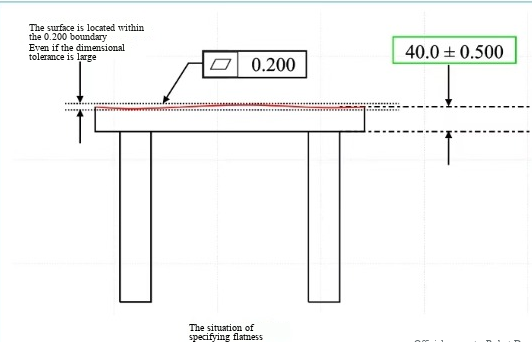
Flatness markings can be used when we want to limit surface waviness or variation without tightening the dimensional tolerances of the surface. Flatness is commonly used to ensure uniform surface wear or proper sealing with mating parts.
It is common in fixtures that require flush fit with another part without wobble, but where orientation is not critical.
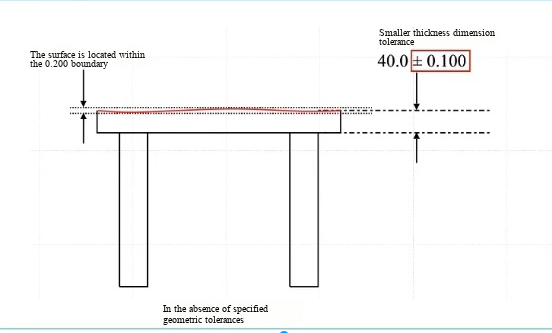
Suppose you need to ensure a perfectly flat tabletop. Without flatness markings, you might need to very strictly control the height of the table to ensure the entire surface is straight.
With flatness markings, you can ensure the tabletop is flat without strictly limiting its thickness. This way, a table with the correct thickness but an uneven surface won't be rejected.
A core performance indicator for surface grinders is achieving high flatness. To achieve this, YASHIDA surface grinders utilize a high-precision guideway system to ensure stable motion, and an imported Japanese NSK precision spindle to reduce vibration.
These technologies guarantee the stability and repeatability of machining results.
Flatness is one of the most fundamental and critical concepts in surface grinding. A deep understanding of its influencing factors and control methods helps companies improve machining quality and enhance market competitiveness.

This website uses cookies to ensure you get the best experience on our website.
 Español
 Portugues
 Pусский
 العربية



 Phone
Phone
Comment
(0)